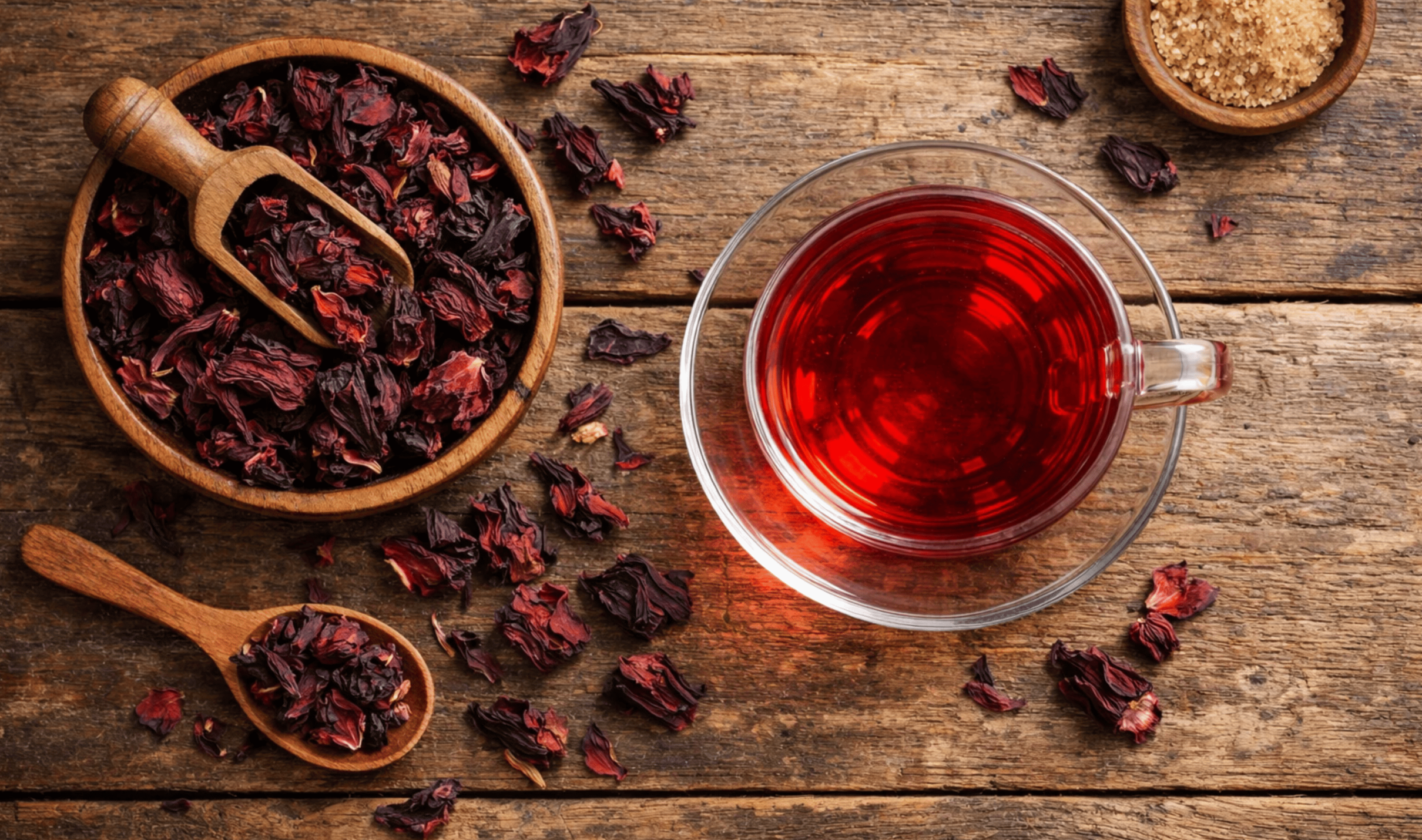
What is Rooibos?

What is Rooibos?
Rooibos (Aspalathus linearis) is a plant native to South Africa, specifically the Cederberg mountain region, where it grows naturally thanks to its unique climate and soil conditions. Although it is often referred to as «rooibos tea» or «South African red tea,» it is not actually a true tea, as it does not come from the Camellia sinensis plant. As a result, it is naturally caffeine-free, making it an excellent choice to enjoy at any time of the day.
The name rooibos comes from the Afrikaans language and means «red bush,» referring to the reddish color the leaves develop during the oxidation process. There are two main varieties:
- Red Rooibos, the most common type, produced through oxidation, which gives it its characteristic reddish color, fruity aroma, and naturally sweet flavor.
- Green Rooibos, which is not oxidized, retains a lighter color and contains a higher concentration of antioxidant polyphenols.
Origin and History
Rooibos has been used for centuries by the indigenous Khoisan people, who brewed its leaves to help relieve digestive discomfort, inflammation, and other common ailments. However, it was not until the early 20th century that rooibos became commercially available, thanks to Benjamin Ginsberg, who introduced it to a wider audience beyond South Africa. Later, physician and botanist Dr. Pieter Le Fras Nortier developed cultivation methods that made large-scale production possible.
Today, rooibos is enjoyed in more than 140 countries. Since 2021, it has also been protected by the European Union’s Protected Designation of Origin (PDO), becoming the first African product to receive this recognition, which guarantees that authentic rooibos originates exclusively from South Africa’s Cederberg region.
Characteristics
Rooibos produces a deep reddish infusion with a naturally sweet, smooth, and slightly fruity flavor. Unlike traditional tea, it contains very low levels of tannins, so it does not develop bitterness even when steeped for longer periods. It can be enjoyed plain or with milk, honey, lemon, or spices, and is delicious served either hot or iced.
Properties and Benefits
Rooibos is naturally rich in antioxidants, particularly aspalathin and nothofagin, two unique compounds found almost exclusively in this plant. Traditionally, rooibos has been valued for several potential health benefits, including:
- Rich in antioxidants that help protect cells from oxidative stress.
- Naturally caffeine-free, making it suitable for all ages and ideal before bedtime.
- Low in tannins, which may support better iron absorption.
- Traditionally associated with digestive and anti-inflammatory properties.
- May promote relaxation and help reduce stress.
- A naturally hydrating herbal infusion.
While scientific research continues to investigate its potential effects on cardiovascular health, metabolism, and immune function, many of these benefits are still being studied.
Production
Rooibos is harvested during the South African summer. The production process typically includes:
- Harvesting and cutting the leaves and stems.
- Crushing the plant material.
- Allowing it to oxidize in the sun to produce red rooibos, or drying it immediately to produce green rooibos.
- Sorting, drying, and packaging the finished product.
This careful process is responsible for rooibos’ distinctive flavor, aroma, and color.
How to Prepare Rooibos
Preparing rooibos is simple:
- Bring fresh water to a boil (100°C / 212°F).
- Add approximately 3 grams (1 teaspoon) of rooibos per cup.
- Steep for 5–8 minutes.
- Strain and enjoy plain or with honey, lemon, milk, or your favorite spices.
Unlike traditional tea, rooibos does not become bitter if steeped for longer, allowing a longer infusion to extract even more flavor and antioxidants.